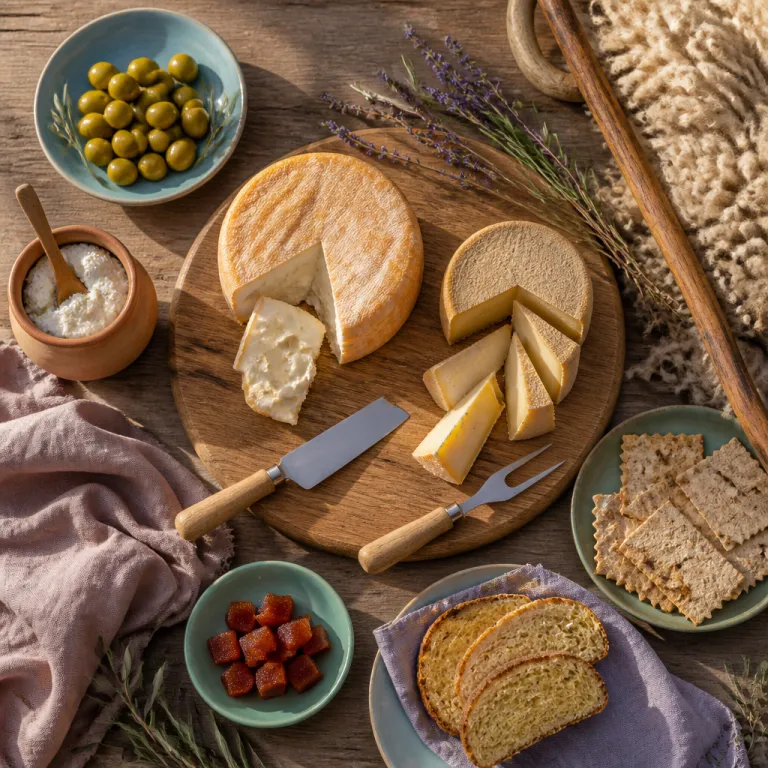
Reading an Alentejo cheese board in a luxury hotel dining room
The first time a server in the Alentejo quietly sets down a wooden board crowded with pale wheels and oozing wedges, you realise this is not just cheese. On a serious hotel table in the Alentejo region, that board is a map of the country, a compact journey through landscapes of sheep, cork oak and stone villages that shape every milk cheese you are about to taste. For a couple who has flown into Portugal for wine, silence and comfort, understanding that map turns a pleasant snack into one of the treasures Alentejo does best.
At the centre of almost every serious board sits the phrase you will see on menus and room service cards alike, the quietly powerful trio of alentejo cheese Serpa Nisa. Those three words signal that you are in the heartland of Portuguese cheese, where raw sheep milk, thistle rennet and time create something far removed from supermarket Portuguese cheeses. When a hotel sommelier in Alentejo Portugal suggests a glass of dense red wine beside Serpa or a slice of queijo Nisa, they are really inviting you into the rich history of a region that has fed Lisbon for centuries.
Luxury properties across Portugal Alentejo now treat these cheeses as seriously as they treat their cellars, and the best concierges will happily arrange a private tasting focused entirely on Portuguese cheese. You might sit on a terrace overlooking the montado, that mosaic of pasture and cork trees where sheep goat herds graze, while a host explains why soft cheese from Serpa behaves differently on the plate than cheese aged from Nisa. In that moment, the Alentejo stops being an abstract region on a map of Portugal and becomes a living, breathing country of milk, olive oil and quiet labour that you can actually enjoy with your hands.
Serpa and Nisa: raw sheep’s milk, cardoon rennet and a very soft centre
On any serious alentejo cheese Serpa Nisa board, Serpa usually arrives first, a low wheel of soft cheese that slumps slightly when cut. It is a protected Portuguese cheese made from raw sheep milk, set not with animal rennet but with cardoon, a wild thistle that has shaped this region’s tradition for centuries. That cardoon gives Serpa its almost spoonable texture and a faint, elegant bitterness that plays against the rich, buttery taste of the milk.
Queijo Nisa, by contrast, is firmer, a cheese aged long enough to slice cleanly yet still yielding under the knife. It is also a protected queijo from the Alentejo region, again based on raw sheep milk and cardoon rennet, but the drier pastures around Nisa and the slightly longer curing give a more concentrated, nutty profile. When you taste Serpa and queijo Nisa side by side in a hotel restaurant, you are tasting not just two cheeses but two microclimates, two ways that sheep and shepherds have adapted to this part of Portugal.
High end properties now brief their teams carefully so they can explain why this vegetarian friendly thistle rennet matters to modern tourism and to couples who care about provenance. Cardoon rennet has been used in Portugal for generations, and its use in alentejo cheese Serpa Nisa means these Portuguese cheeses can sit comfortably on a board shared by guests who avoid animal rennet yet still want authentic flavour. If you are eating alone at the counter of a serious tasca or wine bar, guides such as the piece on where to eat solo in the Alentejo can help you find places where Serpa, Nisa and other milk cheese from the region are treated with the same respect as the wine list.
Season, pasture and the slow ripening behind every slice
What arrives on your plate in a polished dining room began months earlier, when winter and early spring rain coaxed grass and wild herbs from the Alentejo soil. Shepherds move their sheep across the montado so that the animals graze on a mix of pasture and acorns, and that varied diet translates directly into the richness of the sheep milk used for alentejo cheese Serpa Nisa. The best rounds are often made when the milk is at its most concentrated, then left to ripen slowly in cool rooms where time and microflora do their quiet work.
Ask a hotel host to arrange a visit to a small queijaria and you will see how this slow rhythm contrasts with the pace of urban tourism elsewhere in Portugal. In these spaces, fresh curds are ladled into moulds by hand, and over weeks they transform into soft cheese that can be eaten young or cheese aged until the rind thickens and the interior becomes more complex. Many producers still work with simple tools, relying on experience rather than technology, and that human judgement is what keeps the balance between creamy centre and structured rind in both Serpa and queijo Nisa.
Luxury hotels that take their role seriously now frame these visits as part of a broader journey into the food culture of Alentejo Portugal, not as a quick photo stop. They will often pair a queijaria visit with a walk through olive groves or a tasting of local olive oil, so you can connect the dots between the fat in the milk and the fat in the oil that often accompanies the cheeses. Before or after such a day, you might unwind with a glass of wine and a small plate of alentejo cheese Serpa Nisa while reading an elegant guide to the minibar experience in Lisbon, such as the one on discerning minibar rituals for Alentejo travellers, and notice how even urban hotels are starting to stock serious Portuguese cheeses.
How luxury hotels serve Serpa, Nisa and their Portuguese cousins
On the plate, context matters as much as the cheese itself, and the best hotel kitchens in the Alentejo understand this instinctively. A classic board built around alentejo cheese Serpa Nisa will usually include thick slices of local bread, a drizzle of green olive oil, perhaps some honey or quince paste and always a glass of regional wine. That combination lets you explore how the rich, slightly bitter softness of Serpa or the firmer, nutty profile of queijo Nisa shifts when you alternate sips of red, bites of bread and spoonfuls of sweetness.
Many properties now extend the board beyond Serpa and Nisa to include other Portuguese cheeses that tell a broader story of the country. You might find a slice of São Jorge from the Azores, a wedge of Serra da Estrela made from sheep milk in the highlands, or a piece of Cabra Transmontano, a powerful goat milk cheese from the north, all arranged alongside the Alentejo classics. Tasting them together underlines how Portugal rich in landscapes and climates has produced a spectrum of milk cheese styles, and how the treasures Alentejo hold their own among these icons.
For couples who care about detail, it is worth asking how long each cheese aged before service and whether the kitchen prefers them at room temperature or slightly chilled. A good sommelier will steer you towards a wine that flatters the board, perhaps a structured red for Serpa or a fresher white for São Jorge and Cabra Transmontano, and may even suggest a pairing flight that turns a simple snack into a full journey. If you are staying near the Alqueva lake, consider combining a late afternoon tasting with a night canoe and stargazing experience, so that the memory of alentejo cheese Serpa Nisa becomes tied not just to taste but to the silence of one of Europe’s darkest skies.
From board to landscape: shepherds, montado and the future of Portuguese cheese
Behind every elegant board of alentejo cheese Serpa Nisa in a hotel dining room stands a chain of people whose work rarely appears on Instagram. Shepherds rise before dawn to move sheep goat flocks through the montado, reading the land in a way that anchors the region’s rich history in daily practice. Their choices about where animals graze, when to milk and how to care for the herds shape the flavour of the milk long before any cheesemaker touches it.
For travellers who want their tourism spend to support that knowledge, asking a concierge to arrange visits that respect working rhythms rather than stage managed tours is a meaningful step. Some estates now collaborate directly with small producers of Serpa, queijo Nisa and other Portuguese cheeses, paying fair prices for milk and finished wheels so that the future Portuguese cheese landscape remains diverse rather than industrial. When you sit down to enjoy a board that includes Serra da Estrela, São Jorge, Cabra Transmontano and the core alentejo cheese Serpa Nisa, you are effectively voting for a Portugal where rural work remains viable.
Thoughtful properties also use their menus to explain that these cheeses are not just rustic curiosities but part of a living tradition that continues to evolve. They might highlight how younger cheesemakers are experimenting with different lengths of cheese aged or with blending sheep milk and goat milk while still respecting the rules that protect classic styles. In this way, the Alentejo region becomes not just a backdrop for a romantic escape but a country within a country, where milk, olive oil, wine and cheese form a coherent, delicious argument for staying longer and tasting more carefully.
FAQ
What makes Serpa and Nisa different from other Portuguese cheeses ?
Serpa and Nisa are both raw sheep’s milk cheeses from the Alentejo that use cardoon, a thistle rennet, instead of animal rennet. Serpa is usually softer and almost spoonable at the centre, while queijo Nisa is firmer and more sliceable with a nutty profile. Tasting them alongside other Portuguese cheeses such as Serra da Estrela or São Jorge shows how strongly region and pasture shape flavour.
Is alentejo cheese Serpa Nisa suitable for vegetarians ?
Both Serpa and queijo Nisa traditionally use cardoon rennet, which is plant based and therefore suitable for many vegetarians who avoid animal rennet. However, production methods can vary, so it is wise to ask your hotel or the cheesemaker to confirm the rennet used in a specific wheel. Luxury properties that focus on gastronomy usually brief their teams so they can answer this clearly at the table.
How should I eat Serpa and Nisa on a hotel cheese board ?
Serpa is best served at room temperature, when the centre becomes soft and creamy enough to scoop onto bread with a spoon or knife. Queijo Nisa, being firmer, is usually sliced and eaten with bread, olive oil, honey or quince paste, often alongside a glass of Alentejo wine. Start with the milder cheeses on the board and move towards the stronger ones so you can appreciate the subtler flavours.
Can I visit cheesemakers while staying in a luxury hotel in the Alentejo ?
Many high end hotels in the Alentejo region now work closely with local queijarias and can arrange private visits or small group tours. These experiences often include seeing the sheep, watching the cheesemaking process and tasting fresh and aged cheeses such as alentejo cheese Serpa Nisa on site. Ask your concierge to recommend producers who welcome visitors and to schedule visits that respect the daily rhythm of the farms.
What other cheeses should I look for alongside Serpa and Nisa ?
A well curated board in Portugal might include Serra da Estrela, a rich sheep milk cheese from the mountains, São Jorge from the Azores and Cabra Transmontano, a powerful goat milk cheese from the north. When these sit beside alentejo cheese Serpa Nisa, you get a compact tour of the country’s main cheese regions in a single tasting. This mix helps you understand how different milks, climates and ageing styles create the diversity of Portuguese cheese.