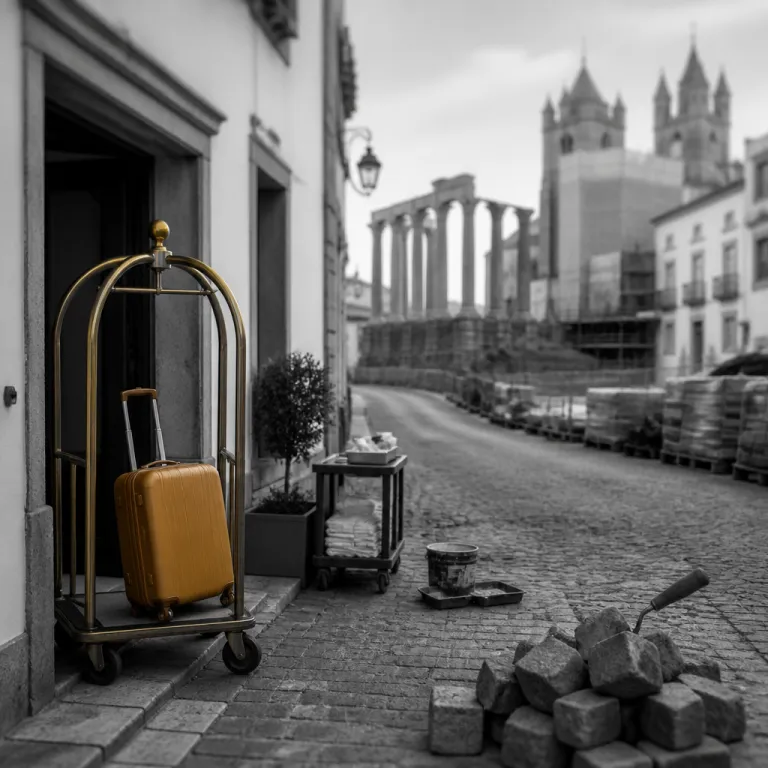
Why Évora’s Capital of Culture title changes how you should plan
Évora is no longer just a quiet stop between Lisbon and the Spanish border. The city has been named a European Capital of Culture for 2027, and that single decision will reshape how you plan every future stay in this historic city. For luxury travellers, the question is simple yet strategic: do you secure your preferred Évora 2027 hotel now, or wait for the full programme to unfold?
The European Commission’s designation turns a small Alentejo city into a year-long cultural stage. Évora 2027 Association, the local organiser, will use exhibitions, performances and workshops across the historic centre to highlight heritage and promote cultural exchange. That means hotels in Évora during the Capital of Culture year will face intense demand, especially around the opening ceremony, the mid-year festival and the closing celebrations.
For a place like Évora, Portugal, where the main square of Praça do Giraldo still feels almost village-like at certain hours, this shift is profound. Euronews, reporting on the European Capitals of Culture 2027 announcement, notes that Évora is preparing to welcome around 1.2 million visitors during 2027, a dramatic increase for such a compact historic centre. Those visitors will move through the narrow streets around Giraldo Square, the Roman temple and every church within walking distance of the centre. If you value space, silence and time to linger, you should think carefully about when to visit Évora and which luxury hotel or small historic property will suit your pace.
Understanding “vagar” and why visiting before the rush matters
Locals talk about “vagar” as more than slow living; it is the rhythm that defines Évora and the wider Alentejo. The Évora 2027 Association describes it clearly in the official material: "A concept promoting slow living, central to Évora 2027." If you are choosing between boutique hotels in the historic centre, the real luxury is often the ability to feel that vagar in the streets and in your hotel located just off the main square.
Right now, Évora still moves at Alentejo time, especially outside peak weekends. You can walk from Praça do Giraldo to the cathedral in a few minutes, pause at a small church doorway, then sit under the arcades of the square without jostling for a table. Staying in Évora before the 2027 cultural programme starts usually means lower nightly rates, easier last-minute upgrades and more attentive local service from teams who still have time to talk. As one long-time hotelier near the Roman temple puts it, “Guests who come before the big year understand Évora as we live it every day, not just as a festival backdrop.”
The designation as a European Capital of Culture will inevitably change that balance once the full calendar is released at the end of the coming year. When every exhibition, performance and workshop is mapped, visitors will plan trips around specific dates, and train and bus arrivals from Lisbon will spike. If you prefer to visit Évora, Portugal while the Alentejo region still feels unhurried, consider combining a two-night stay in the historic city with a few days at a colour-forward coastal retreat in the broader Alentejo, as explored in our guide to the next generation of Alentejo hotels choosing clay and colour.
New luxury openings in the historic centre: what they signal
The most concrete sign that Évora’s hotel scene is entering a new era is the arrival of two carefully scaled properties in the historic centre. Hotel Santo André Évora by Wot Signature brings 27 rooms into a restored building, a size that feels aligned with the city’s small-scale streets. Entre Hotel, with just 18 rooms located between Praça do Giraldo and the cathedral, places guests within a short walking distance of every major church, museum and square. Both openings have been highlighted in regional hospitality news and company press releases as early responses to the European Capital of Culture momentum.
These launches show how investors now view Évora as a long-term luxury destination rather than a quick stop from Lisbon. These are not anonymous blocks on the edge of town; each hotel is located within the medieval fabric, where you can step out and reach the main square in what many guests will describe as "five minutes" on foot. For couples planning a romantic stay, that proximity means you can plan visits to exhibitions or performances, then return to your room for a quiet hour before dinner without needing public transport.
For travellers who know Portugal’s wider luxury scene, the scale here contrasts with grand urban icons such as Le Monumental Palace in Porto. If you enjoy that level of service and detail, our review of why Le Monumental Palace belongs on every luxury traveller’s shortlist offers useful benchmarks when you evaluate high-end hotels in Évora for 2027. Expect fewer marble lobbies, more stone arches, and a focus on local materials like cork, limewashed walls and Alentejo textiles.
Where to stay: from olive scented townhouses to countryside herdades
Choosing between staying in the historic centre or the countryside starts with one question: do you want to wake up to bells over Giraldo Square or to birds over cork oak fields? In the city, you will find restored townhouses and a growing number of properties that feel like an olive hotel, where design leans into stone, wood and the scent of local olive oil. Many of these boutique hotels are located within a short distance of Praça do Giraldo, making it easy to plan visits to exhibitions and performances during the Capital of Culture year.
Beyond the city walls, the Alentejo region opens into a patchwork of herdades, the traditional estates that define Évora’s rural landscape. Here, luxury hotel experiences often mean long lunches under pergolas, private tastings of Évora olive oils and wines, and pools that look across wheat fields rather than infinity edges. If you plan a visit that combines central Évora with a countryside stay, allow enough time so that the journey by bus, train or private transfer between properties does not eat into your slow afternoons.
Couples who enjoy craft and culture can also weave in a day trip to São Pedro do Corval, Europe’s largest ceramics village, using our detailed guide to buying pottery in the Alentejo. Whether you base yourself in a characterful hotel in the centre or at a rural luxury retreat, this kind of local excursion keeps your stay anchored in the region’s textures and traditions. The key is to plan your days so that travel time feels like part of the experience rather than a logistical chore.
Practicalities: getting to Évora and moving at the right pace
Reaching Évora from Lisbon is straightforward, which is one reason hotels in the city are expected to see such strong demand during 2027. The train from Lisbon’s Entrecampos or Oriente stations takes around 1 hour 30 minutes, and the main bus options are similar in total time. Once you arrive, the distance from the train or bus station to the historic centre is short enough that many travellers will walk if they have small bags.
Inside the city, you will not need a car to visit Évora, Portugal’s main sites. From most hotels located near Praça do Giraldo, you can reach the cathedral, the Roman temple and at least one significant church within ten minutes on foot. That compact layout is part of what makes Évora such a compelling European Capital of Culture host; the entire historic city becomes a walkable stage where performances, exhibitions and workshops unfold in close proximity.
When you plan a visit, think in terms of days rather than hours. A two-night stay in a central Évora hotel allows time to wander the arcades of the main square, taste local dishes like açorda and migas, and perhaps schedule a guided walk focused on the city’s Jewish heritage or Roman layers. If you extend to three nights and add a countryside luxury hotel in the wider Alentejo region, you can balance cultural intensity with the deep quiet that defines this part of Portugal. For a practical framework, see the checklist below for suggested months, booking windows and a sample itinerary.
How to time your stay between now and the Capital of Culture year
With the full cultural programme expected at the end of the coming year, timing becomes your most powerful tool when choosing dates for Évora 2027. Travellers who value access to headline performances and international exhibitions will want to align their plans to the opening ceremony, the mid-year festival or the closing events. Those who care more about vagar, the slow living philosophy at the heart of Évora and the Alentejo, may prefer the seasons just before and after the peak cultural calendar.
One strategy is to plan a visit in the months leading up to the official start, when preparations are visible but crowds remain manageable. You might see rehearsals in a small square, temporary installations near Giraldo, or workshops testing ideas that will later scale up. Another approach is to visit Évora now, staying in a favourite luxury hotel while the city is still adjusting, then return later to a different property located closer to a specific venue once the programme is public.
To make those decisions easier, use this simple planning checklist:
- Best months for vagar: March to May and late September to November, when temperatures are softer and weekend crowds are lighter than in midsummer.
- Booking window: for 2027, aim to reserve central Évora hotels 6–9 months ahead for major events, and 3–4 months ahead for quieter weeks.
- Sample three-night itinerary: Day 1 – mid-morning train from Lisbon (around 1 hour 30 minutes, typical advance fares from €10–€20 per person), check into a boutique hotel near Praça do Giraldo, evening walk and dinner in the historic centre. Day 2 – morning visit to the cathedral and Roman temple, afternoon exhibition or performance linked to the Capital of Culture programme, dinner at a contemporary Alentejo restaurant. Day 3 – private transfer or taxi (30–40 minutes, from roughly €40–€70 depending on distance) to a countryside herdade for a final night of vineyard or olive grove views before returning to Lisbon.
Key figures shaping Évora’s next chapter
- Évora is expected to welcome around 1.2 million visitors during its European Capital of Culture year, according to Euronews coverage of the 2027 designation, a significant increase for a small historic city in the Alentejo region.
- The official cultural programme for Évora’s Capital of Culture status is scheduled to be released at the end of the year before the events, giving travellers several months to plan visits and secure accommodation in and around the historic centre.
- The cultural calendar will run for a full 12 months, from early January to late December, turning Évora into a continuous stage for exhibitions, performances and workshops.
- Two new properties, Hotel Santo André Évora by Wot Signature with 27 rooms and Entre Hotel with 18 rooms, are among the first luxury-focused openings responding directly to the Capital of Culture designation, as noted in regional hospitality reports and brand announcements.
- Most major sites in Évora, Portugal, including Praça do Giraldo, the cathedral and the Roman temple, sit within roughly 500 metres of each other, allowing visitors to move between events on foot rather than relying on frequent bus or train connections.
FAQ: planning your Évora Capital of Culture stay
What is Évora 2027 and who is behind it?
Évora 2027 is the city’s year as a European Capital of Culture, a European Commission initiative that highlights cultural heritage and fosters exchange across the continent. The Évora 2027 Association manages the local programme, working with local artists and international cultural organisations to design exhibitions, performances and workshops across the historic centre. Their focus on vagar, or slow living, aims to ensure that the events reflect the character of Évora and the Alentejo rather than imposing a generic festival model.
When will the main events take place?
The Capital of Culture calendar will run for a full year, with an opening ceremony at the very start, a major mid-year festival and closing events at the end. The detailed programme is expected to be published at the end of the preceding year, giving travellers time to align their bookings in Évora with specific exhibitions or performances. For the most up-to-date information, you should consult official Évora 2027 Association channels once the schedule is released.
Should I visit Évora before or during the Capital of Culture year?
Visiting before the official year offers smaller crowds, lower average hotel rates and a more relaxed pace in Évora. Staying during the Capital of Culture period brings access to a dense programme of events, but also higher demand for every luxury hotel and more pressure on the main square, restaurants and transport. Many travellers will find that the ideal approach is to visit once before the rush, then return later for a shorter, event-focused stay.
How far is Évora from Lisbon and what is the best way to get there?
Évora lies roughly 130 kilometres east of Lisbon, and the journey by train or bus typically takes around 1 hour 30 minutes. Direct services connect the two cities several times a day, making it easy to plan a visit without renting a car. Once you arrive, the distance from the station to most hotels near Praça do Giraldo is short enough for a taxi or a brief walk with light luggage.
How early should I book my hotel for Évora’s Capital of Culture year?
Given the forecast of around 1.2 million visitors over the year, it is wise to secure your preferred luxury hotel as soon as your travel dates are fixed. Properties in the historic centre, especially those located near the main square and key venues, will be the first to sell out around major events. If you plan a visit that combines central Évora with a countryside stay in the wider Alentejo region, book both elements together so that transfers and timings align smoothly.
Sources and further reading
- Euronews – Coverage of Évora’s selection as a European Capital of Culture and its projected impact on tourism and hotel development.
- European Commission – Official information on the European Capitals of Culture initiative and objectives.
- Évora 2027 Association – Programme updates, background on the vagar concept and practical visitor information.