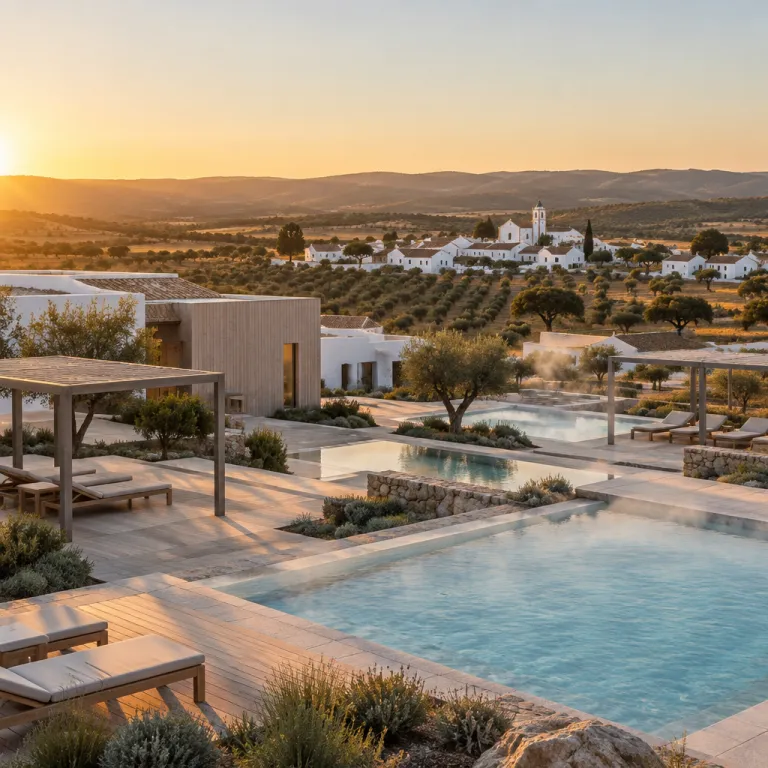
Alentejo’s thermal story: wellness shaped by the land’s own water
Alentejo thermal spa hot springs are not about scented candles and playlists. They are about thermal waters rising through schist and granite, carrying mineral water signatures that belong to this landscape alone. In a region where silence, wheat fields and cork oaks already slow your pulse, the thermal spa tradition feels like the missing piece.
Across inland Portugal, the word termas signals places where water is the main treatment, not an accessory to a massage menu. These are not generic springs in Portugal but specific hot springs where the temperature, flow and mineral content have been observed for generations. When you plan a stay, you are choosing a location where the water itself is the central experience, from classic thermal baths to contemporary spa resort pools.
Many of these springs in Portugal were first formalised in the roman era, when baths were civic spaces as much as therapeutic rituals. That heritage still shapes how visitors move through the day, alternating between hot water immersion, cooler baths and long hours of rest. For couples used to fast spa treatments, the rhythm of these thermal retreats can feel almost radical in its slowness.
What sets Alentejo thermal spa hot springs apart from other Portugal thermal destinations is their integration with rural life. You are rarely far from a working herdade, a vineyard or a village square where the café knows the spring’s opening hours by heart. Wellness here is not a separate world ; it is woven into the same fabric as olive oil, bread soup and late afternoon shadows.
Think of each pool of thermal waters as a reading of the geology beneath your feet. High mineral content, sometimes rich in specific salts or gases, gives each spring a distinct character that you feel on the skin rather than see on a label. The best hot experiences are often the simplest ones, where you move between springs hot and cool showers, then sit under a cork tree with nothing scheduled for the next two hours.
From historic termas to contemporary estates: where to bathe and stay
The classic Portuguese termas model usually combines a modest thermal spa complex with a small hotel and medical wing. In Alentejo, that template is evolving as rural estates fold thermal baths into broader countryside stays. The result is a new generation of spa resort properties where the water remains central but the hospitality feels quietly luxurious.
Names like Termas de Cabeço de Vide, often written as Cabeco Vide, sit on the edge of the Alentejo and central Portugal conversation. While some of these springs in Portugal are better known nationally than internationally, they illustrate how mineral water has shaped local routines for decades. Couples booking through a curated platform can pair such a day visit with a higher end stay on a nearby wine estate, using the thermal waters as a daytime ritual and the vineyard as their evening setting.
Further north, places such as São Pedro do Sul, often searched as Pedro Sul or São Pedro, and the historic complex at Pedras Salgadas show how Portugal thermal culture has modernised. These are not in the Alentejo, yet they form part of the wider springs Portugal network that informs how Alentejo properties think about water. When you see a pool fed by thermal waters on an Alentejo estate, it often nods to this national lineage of thermal retreats and therapeutic bathing.
Older spa towns like Caldas da Rainha and the more discreet Termas de Longroiva, sometimes written as termas Longroiva, underline how deeply the country associates baths with health. Many of these complexes still publish detailed opening hours and treatment schedules, reflecting a quasi medical heritage. As a modern wellness traveller, you might skip the formal treatments and simply book access to the thermal baths, then return to your rural hideaway for slow dinners and long sleeps.
In the Alentejo itself, the most interesting properties are those that treat water as part of their terroir, not a generic amenity. A stay near Monsaraz, for example, lets you combine lake views and medieval streets with day trips to traditional termas in Portugal’s interior ; guides like this one on refined stays in Monsaraz help you position your base. The key is to choose estates that speak openly about their water source, their thermal spa philosophy and how they balance privacy with access to local hot springs.
How to structure a thermal day: pacing, treatments and real expectations
A day built around Alentejo thermal spa hot springs moves at a different speed from a typical resort schedule. You are not racing between back to back treatments but stretching time around a few essential hours in the water. Think of it as a countryside siesta, only with mineral water instead of a darkened bedroom.
Most traditional complexes in Portugal publish clear opening hours for their thermal spa facilities, often with separate slots for medical users and leisure visitors. It is worth checking these hours in advance, especially if you are pairing a morning of thermal baths with an afternoon drive back to your spa resort. Couples who like structure can book one or two short treatments, then leave generous gaps for unhurried bathing and rest.
Typical offerings include simple immersion in hot springs pools, alternating with cooler baths and sometimes steam rooms fed by thermal waters. Some locations still frame their treatments as therapeutic, drawing on long histories of medical use, though you should always verify any health claims with up to date medical guidance. The most satisfying experiences often come from listening to your own body rather than chasing every option on the list.
Water temperature matters more than menu length. Springs hot enough for winter bathing can feel heavy in high summer, while milder thermal waters are perfect for shoulder seasons. If you are sensitive to heat, look for pools where the mineral water is mixed with regular water to create a more moderate thermal profile.
Plan your meals around the water. A light lunch between sessions helps you avoid that post bath slump, especially when the air outside is still Portugal hot. For couples who like to extend the day into evening, pairing a late thermal session with one of the region’s after dark Alentejo activities can turn a simple spa visit into a full romantic ritual.
Seasonality and atmosphere: why thermal Alentejo shines off season
Alentejo thermal spa hot springs come into their own when the beaches empty and the evenings cool. Autumn and winter suit hot water, long baths and slow drives between whitewashed villages. For couples used to summer only travel, this shift in rhythm can feel quietly luxurious.
Off season, the contrast between crisp air and hot springs becomes part of the pleasure. You move from misty mornings to steam rising off thermal waters, then back to a firelit room on your estate. Properties that lean into this seasonality often offer thermal retreats packages, pairing access to nearby termas with slow breakfasts and late check outs.
Choosing when to travel is as important as choosing your location. A practical guide to the best time of year to visit Portugal will help you align weather, crowd levels and opening hours at thermal complexes. Many traditional termas in Portugal adjust their schedules outside peak season, so it pays to confirm details directly with each property.
Some couples like to combine a few days of thermal baths with a stay near higher profile destinations such as Pedras Salgadas or even a detour to Caldas da Rainha. While these are outside the Alentejo, they deepen your understanding of how springs in Portugal have shaped national wellness culture. Returning south afterwards, the quieter Alentejo estates feel even more intimate.
Winter light in the interior of Portugal is softer, the fields muted and the cork oaks darker against the sky. In that palette, the sheen of mineral water in a stone pool feels almost theatrical, especially when the only sound is wind in the trees. For many visitors, this is when the region’s best hot water experiences become less about spa branding and more about a direct, almost monastic relationship with the land.
Choosing the right estate: matching couples to water, setting and style
Not every luxury property in the region is built around Alentejo thermal spa hot springs, so clarity matters when you book. Some estates offer direct access to on site springs, while others partner with nearby termas and frame the water as a day trip. Your ideal match depends on how central you want bathing to be in your stay.
If you are drawn to the deeper Portugal thermal tradition, look for properties that reference specific springs, not just generic spa language. Mentions of places such as Cabeço de Vide, São Pedro do Sul, Unhais da Serra, Pedras Salgadas or even Termas de Longroiva signal a connection to the wider springs Portugal network. While not all of these lie within the Alentejo, they show that the property understands thermal waters as part of a national culture rather than a passing trend.
Couples who prefer a softer introduction might choose a spa resort where thermal waters are one element among many. Here, you might move from a pool fed by mineral water to a vineyard walk, then to a dinner built around local olive oil and bread. The water remains important, but the narrative is as much about landscape, food and light as it is about baths and treatments.
When comparing options on a curated booking site, pay attention to how each estate talks about its water. Do they specify mineral content, temperature ranges and hours of access, or simply mention a spa in passing ? Properties that publish clear information about opening hours, pool etiquette and any therapeutic framing tend to be more serious about their thermal offer. This level of detail also helps visitors plan days that balance immersion, rest and exploration.
For couples, the most memorable stays usually combine three elements in one location. There is a credible relationship to thermal waters, a setting that feels unmistakably Alentejo and a hospitality style that respects quiet. When those align, wellness stops being a list of treatments and becomes something simpler ; a few unhurried hours in hot water, a walk among cork oaks and the sense that the land itself is doing most of the work.
FAQ
Are there genuine thermal hot springs in the Alentejo region ?
There are thermal springs in and around the Alentejo, though many of Portugal’s most famous termas, such as São Pedro do Sul, Unhais da Serra, Pedras Salgadas and Termas de Longroiva, sit outside the region. In the Alentejo, you will more often find estates that draw on local mineral water sources or partner with nearby thermal complexes. Always check whether a property’s pools are genuinely fed by thermal waters or simply heated conventionally.
How do Alentejo thermal experiences differ from regular hotel spas ?
Traditional thermal baths in Portugal are built around the water itself, with bathing and simple treatments at the core. Many regular spas focus more on massages and branded rituals, using standard heated water in their pools. In the Alentejo, the most interesting properties treat mineral water as part of their terroir, integrating it with local architecture, food and landscape.
When is the best time of year to visit Alentejo thermal spa hot springs ?
Thermal bathing is most comfortable in cooler months, from autumn through early spring, when hot water contrasts with crisp air. Summer can still work if you choose milder springs or bathe early and late in the day. Always confirm seasonal opening hours for any termas or thermal spa you plan to visit.
Can I combine thermal spa days with other activities in the Alentejo ?
Yes, many couples pair morning sessions in thermal waters with slow afternoons on wine estates, lake excursions or village walks. Because bathing can be deeply relaxing, it is wise to keep other activities light and unhurried. Evening experiences such as stargazing or gentle night kayaking work particularly well after a day in hot springs.
How should I choose a luxury estate if thermal waters are a priority ?
Look for properties that clearly state their relationship to specific springs, whether on site or via partnerships with nearby termas. Check whether pools are fed by genuine mineral water, what temperatures to expect and how many hours per day you can access them. Reading detailed descriptions and guest reviews will help you distinguish between marketing language and serious thermal offerings.