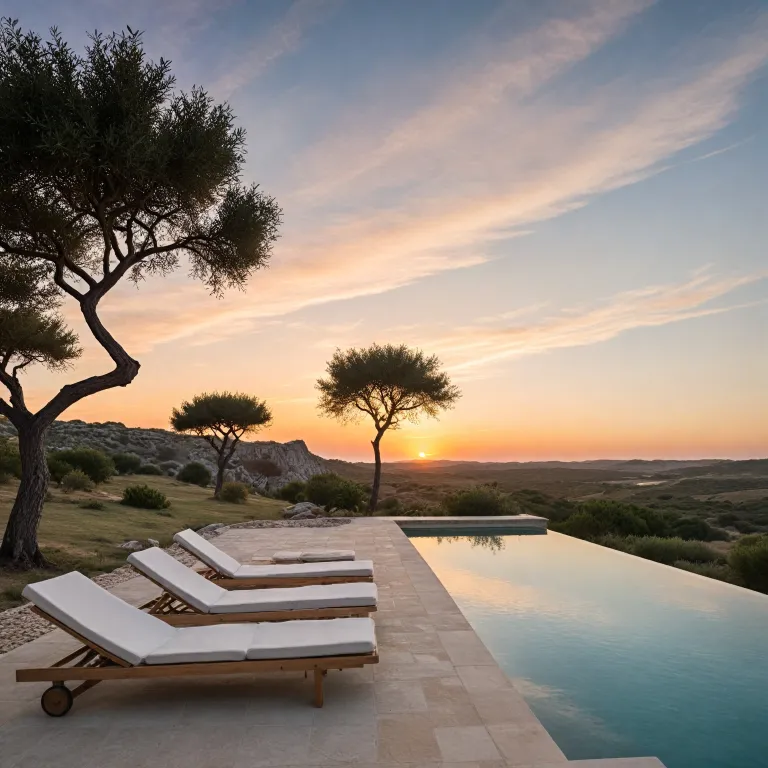
Alentejo coast as a refined alternative to crowded seaside escapes
The Alentejo coast offers a quieter rhythm than many coastal areas in Portugal. Along this stretch of coast, travellers seeking luxury and premium stays will find space, silence, and a strong sense of place. The region balances discreet elegance with authentic Alentejo character, which appeals to guests who value calm more than spectacle.
This part of Portugal is framed by the Atlantic on one side and a patchwork of vineyards, cork oak forests, and olive groves on the other. The Alentejo coast is therefore ideal for a journey that combines beach relaxation, rural experiences, and cultural excursions to towns such as Évora. Many high end properties in the area are designed to blend into nature, using local stone, limewashed walls, and traditional tiles rather than imposing resort architecture.
From the Troia peninsula down to the Costa Vicentina, the coastline alternates between long sandy beaches and intimate coves. Guests can choose hotels near the river Sado estuary, in the southwest Alentejo and Vicentine Coast Nature Park, or close to fishing villages such as Porto Covo and Vila Nova de Milfontes. Each area of the Alentejo coast has its own atmosphere, yet all share a commitment to preserving the natural environment and supporting sustainable tourism.
The Alentejo Regional Tourism Authority has focused on promoting this region as a premium but responsible destination. Their work, supported by data from the National Statistics Institute, shows that tourism in this part of Portugal has grown while still feeling uncrowded. For travellers, this means they can enjoy beautiful beaches and refined hotels without sacrificing tranquillity or authenticity.
How luxury and premium hotels shape the character of the Alentejo coast
Luxury and premium hotels along the Alentejo coast are typically low rise, with architecture that respects the landscape. Many properties overlook the coast or a nearby river, yet remain set back enough to protect dunes and cliffs. This approach reflects a wider regional commitment to nature and to the long term value of sustainable tourism in Portugal Alentejo.
In the Troia area, guests can stay close to the river Sado and its sandbank beaches, while enjoying refined spa facilities and fine dining. Further south, near Porto Covo and Vila Nova de Milfontes, hotels often emphasise proximity to the Vicentine Coast and the southwest Alentejo and Vicentine Coast Nature Park. These locations allow guests to walk directly from their room to coastal trails, where they will find dramatic cliffs, nesting seabirds, and views over the Atlantic.
Many premium properties in this region highlight local gastronomy, especially olive oil, fresh seafood, and wines from Alentejo Portugal. Menus often pair regional olive oil with bread from nearby towns, and some hotels organise tastings that connect guests with small producers. This focus on what guests can eat and drink deepens the sense of place and supports local economies across the region.
For travellers comparing options, a dedicated luxury and premium hotel booking website for Alentejo can clarify differences between properties. Detailed descriptions of room categories, spa facilities, and services help guests choose the best match for their journey. When planning a high end stay, it is also useful to consult specialised resources on five star hotel reservations in Alentejo, which explain how to secure the most suitable room types and services.
Choosing the right area of the Alentejo coast for your stay
Selecting the right area along the Alentejo coast is essential for a satisfying luxury stay. The Troia peninsula, facing Setúbal across the river Sado, suits travellers who want a resort style environment with casinos, marinas, and long stretches of beach. This part of Portugal southern coast offers easy access from Lisbon, which makes it attractive for shorter breaks and last minute escapes.
Further south, the area around Porto Covo and Vila Nova de Milfontes feels more intimate and traditional. Here, the southwest Alentejo and Vicentine Coast Nature Park protects cliffs, dunes, and small coves, creating some of the most beautiful beaches in the region. Guests who stay in this part of the Alentejo coast will find a strong connection to fishing culture, with small harbours, whitewashed houses, and simple seafood restaurants.
Travellers interested in hiking can base themselves near the Rota Vicentina, a network of coastal and inland trails that crosses the Costa Vicentina. From these hotels, guests can walk along the alentejo vicentine shoreline in the morning, then return to spa facilities and refined dining in the evening. A specialised luxury and premium hotel booking website can highlight which properties offer direct access to the Rota Vicentina and other nature park experiences.
Those planning a longer journey may combine the Alentejo coast with inland stays near Évora or other historic towns. This allows visitors to experience both the maritime character of the vicentina coast and the cultural heritage of the wider Alentejo region. For a deeper understanding of tailored services, travellers can consult guidance on personalised services on luxury and premium hotel booking websites in Alentejo, which explains how to align expectations with what each property offers.
Design, wellness, and privacy in high end coastal stays
Design in luxury hotels along the Alentejo coast tends to be understated rather than ostentatious. Many properties use whitewashed walls, natural stone, and timber to echo traditional Alentejo architecture. Interiors often feature neutral tones, linen fabrics, and handcrafted ceramics, which create a calm backdrop for views of the coast or countryside.
Wellness facilities are increasingly central to premium stays in this region of Portugal. Guests will find spas that use local ingredients such as olive oil, sea salt, and aromatic herbs in treatments. Some hotels also offer yoga platforms overlooking the coast, as well as heated pools that allow guests to swim even when Atlantic winds are strong.
Privacy is another key element of high end stays in Alentejo Portugal, especially for couples and small groups. Many properties offer suites with private terraces, plunge pools, or direct access to gardens that open towards the coast. For travellers who value seclusion, it is worth consulting specialised advice on exclusive stays with private pools in Alentejo, which explains how to select rooms that balance privacy with views.
Because the region is known for its nature park landscapes, hotels often integrate outdoor experiences into their wellness concepts. Guests can combine spa treatments with guided walks along the Costa Vicentina, stand up paddle sessions on a nearby river, or horse riding on the beach. This blend of nature, design, and wellness helps position the Alentejo coast as one of the best options for travellers seeking a slower, more reflective form of luxury.
Cultural immersion, literary tourism, and gastronomy along the Alentejo coast
Beyond the beaches, the Alentejo coast offers rich opportunities for cultural immersion. Traditional fishing villages such as Porto Covo and Vila Nova de Milfontes retain a strong sense of community, especially outside peak tourism periods. Guests who stay in smaller properties within the town centres can walk to local markets, harbour fronts, and family run restaurants.
Literary tourism is an emerging theme in this region of Portugal Alentejo, where writers have long been inspired by the Atlantic light and open landscapes. Some hotels curate small libraries focused on Portuguese literature, travel writing, and works connected to the Alentejo region. Others organise readings or themed walks that trace references to the coast, the river, and rural life in selected texts.
Gastronomy remains a central attraction, with many visitors planning their journey around where they will eat and drink. Menus along the Alentejo coast often highlight fresh fish, shellfish, and regional olive oil, alongside wines from inland estates. Guests can expect to find dishes that combine coastal ingredients with inland traditions, reflecting the dialogue between sea and countryside that defines Alentejo Portugal.
For travellers seeking a destination Alentejo experience, it is worth exploring restaurants that work closely with small producers. These venues often showcase seasonal vegetables, artisanal cheeses, and olive oil from nearby farms, reinforcing the connection between tourism and local agriculture. Such experiences help position the Alentejo coast as a place where luxury is measured not only in facilities, but also in depth of flavour and cultural resonance.
Planning your premium Alentejo coast journey with confidence
Planning a luxury stay along the Alentejo coast requires attention to timing, location, and style of property. The region remains relatively uncrowded compared with other parts of Portugal southern coast, yet demand for the best hotels has increased. According to the National Statistics Institute (INE), “Overnight stays in 2022: 1,049,043 stays; Increase in overnight stays from 2021 to 2022: 24.4 %; Increase in overnight stays from 2019 to 2022: 7.2 %.”
These figures reflect the growing appeal of the Alentejo coast as a high quality tourism destination. To secure preferred room categories, especially those with sea views or private pools, travellers should book well in advance. A specialised luxury and premium hotel booking website focused on Alentejo Portugal can help guests compare locations, services, and cancellation policies with clarity.
When evaluating options, consider how close each property is to the coast, to a river such as the river Sado, or to protected areas like the southwest Alentejo and Vicentine Coast Nature Park. Guests who prioritise hiking may prefer hotels near the Rota Vicentina, while those who value nightlife might choose the Troia area. Families often appreciate properties near wide, gently shelving beaches, where children can play safely and adults can relax.
Finally, think about how your stay contributes to the long term health of the region. Choosing hotels that support local employment, use regional products such as olive oil, and respect the natural environment helps sustain the character of the Alentejo coast. In doing so, travellers ensure that future visitors will find the same beautiful beaches, quiet towns, and unspoiled nature that make this part of Portugal unique.
Key tourism statistics for the Alentejo coast
- Overnight stays on the Alentejo coast exceeded one million, indicating strong and sustained demand for the region.
- Overnight stays increased by 24.4 % compared with the previous year, reflecting rapid growth in tourism activity.
- Overnight stays rose by 7.2 % compared with the pre growth baseline, confirming the long term appeal of the destination.
Essential questions about planning a stay on the Alentejo coast
What are the main attractions on the Alentejo Coast?
The Alentejo Coast boasts pristine beaches, traditional fishing villages, and natural parks offering hiking and wildlife observation. Travellers can explore the Costa Vicentina, the southwest Alentejo and Vicentine Coast Nature Park, and towns such as Vila Nova de Milfontes and Porto Covo. Inland excursions to Évora and other historic centres complement the coastal experience.
Is the Alentejo Coast suitable for family vacations?
Yes, the region offers a variety of family friendly activities, including beach outings, cultural tours, and nature excursions. Many hotels on the Alentejo coast provide spacious rooms, pools, and easy access to beautiful beaches with gentle waves. Families can also enjoy boat trips on the river Sado, visits to nature parks, and relaxed meals in local restaurants.
What is the best time to visit the Alentejo Coast?
The best time to visit is during the spring (April to June) and early autumn (September to October) when the weather is pleasant, and tourist crowds are smaller. During these periods, guests will find comfortable temperatures for hiking the Rota Vicentina and exploring coastal towns. Prices can also be more favourable than in peak summer, while services and facilities remain fully available.
Sources : Alentejo Regional Tourism Authority ; National Statistics Institute (INE) ; Visit Portugal